|
Table of Contents
Introduction Principles More Formations Facing Dancers Larger Formations |
| Tutorials Home |
2.5: DIRECTION AND ORIENTATION
If dancers have their left shoulder toward the center point of the formation, they will be turning to the left. If they have their right shoulder toward the center point of the formation, they will be turning to the right.The shoulder need not be directly pointing toward the center point. For example, the trailer in a right-hand box sees the center point both to the right and forward. If you prefer to think in terms of angles, you can think of this as 45 degrees to the right. But simply "ahead and to the right" is good enough.
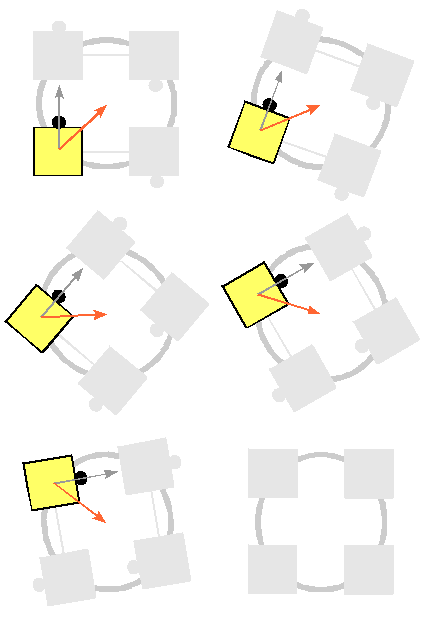
Because the center point is to this dancer's right (right shoulder closer to the center point than left shoulder), this dancer will be turning to the right and moving clockwise along the circlular path. Notice that as the box counter rotates, the center point continues to be "ahead and to the right" from this dancer's perspective. This is because of the fact the dancer is moving around the center point and turning the same amount at the same time.
To the leader in a left-hand box, the center point of the box is to the left and behind. (You could think of this as 135 degrees to the left.)
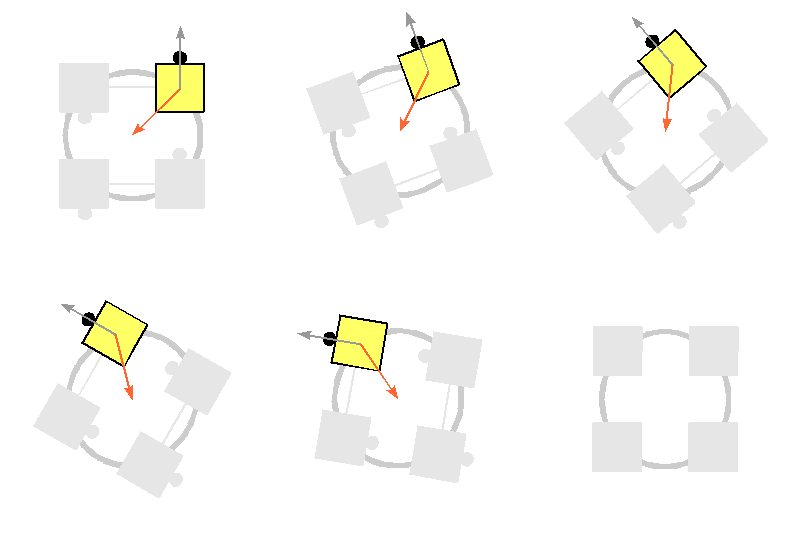
Because the center point is to the left, this dancer will be turning left and moving counter-clockwise. As the box counter rotates, from this dancer's perspective the center point is always behind and to the left.
| PREV | NEXT |